


I-WAY ACADEMY
Brush Pen 毛筆筆
In this lesson, we explore the brush pen — a writing instrument that combines the flexibility of a traditional brush with the convenience of a pen. You will learn how the tip works, how pressure creates thick and thin lines, which inks and papers suit brush work, how to care for your brush pen, and common mistakes to avoid. Whether you practise modern calligraphy, lettering, or urban sketching, the brush pen is one of the most expressive tools in the Pierre Cardin Writing Instruments / I-WAY Academy toolkit.
在本課中,我們將探討毛刷筆——結合傳統毛筆柔韌與一般筆便利的書寫工具。您將學習筆尖如何運作、力度如何創造粗細線條、哪些墨水與紙張適合毛刷書寫、如何保養毛刷筆,以及常見錯誤。無論您練習現代書法、美術字或城市速寫,毛刷筆都是 Pierre Cardin Writing Instruments/I-WAY 學院工具箱中最具表現力的工具之一。

i-Brush set

GIN Water Brush
What Is a Brush Pen? 什麼是毛刷筆?
A brush pen is designed so that a flexible tip — usually felt, nylon, or synthetic fibre — delivers ink much like a paintbrush, while the barrel and ink supply behave like a pen. Unlike a fountain-pen nib or a rollerball tip, the brush tip bends and springs back under pressure. That flexibility is what lets you move from a hair-thin stroke to a bold wash in a single continuous line.
毛刷筆的設計,是讓柔韌的筆尖——通常是毛氈、尼龍或人造纖維——像畫筆一樣送出墨水,而筆身與供墨方式則像一般筆。與鋼筆筆尖或走珠筆尖不同,毛刷筆尖在壓力下會彎曲並回彈。正是這種柔韌,讓您能在同一連續線條中,從髮絲般的細線過渡到粗壯的渲染。
Brush pens are popular with calligraphers, lettering artists, and sketchers because they offer:
毛刷筆深受書法家、美術字創作者與速寫者歡迎,因為它能提供:
- A wide range of line widths without changing tools
- Portability compared with traditional brushes and ink dishes
- Ready ink flow for practice sessions, travel sketching, and everyday creative notes
- 無需更換工具即可寫出多種線條粗細
- 比傳統毛筆與硯台更便攜
- 墨水即用即寫,適合練習、外景速寫與日常創作筆記
Mechanism 結構原理
Tip structure 筆尖結構
Most brush pens use one of these tip types:
大多數毛刷筆使用以下其中一種筆尖:
- Felt or fibre tip: Firm enough for control, soft enough to flare under pressure. Common in beginner lettering pens.
- Synthetic hair / nylon brush tip: Closer to a traditional brush; more flexible and capable of very fine points when held lightly.
- Water brush (reservoir brush): A barrel filled with water (or diluted ink) that feeds a brush tip — useful for watercolour-style washes and for blending alongside pigment markers.
- 毛氈或纖維尖:夠硬以便控制,又夠軟可在壓力下展開。常見於初學美術字筆。
- 人造毛/尼龍毛刷尖:更接近傳統毛筆;更柔韌,輕觸時可寫出極幼的尖端。
- 貯水毛筆(水筆):筆身裝滿清水(或稀釋墨水)供應毛刷尖——適合水彩式渲染,亦可配合顏料馬克筆混色。
Ink typically travels from a cartridge, reservoir, or felt core into the tip by capillary action. As you press the tip against the paper, more fibres or bristles contact the surface and more ink is released — so pressure and angle both control line weight.
墨水通常由筆芯、儲墨腔或毛氈芯經毛細作用進入筆尖。當您將筆尖壓向紙面,更多纖維或筆毛接觸紙面,釋出更多墨水——因此力度與角度共同控制線條粗細。
Pressure and angle 力度與角度
- Light pressure / upright angle: Thin, delicate lines — ideal for hairlines, small lettering, and fine detail in sketches.
- Heavy pressure / flatter angle: Thick, bold strokes — used for downstrokes in modern calligraphy, fills, and expressive sketch lines.
- Gradual pressure change: Creates the classic thick-to-thin transition that defines brush lettering and many East Asian–inspired stroke styles.
- 輕力/較直立角度:幼細線條——適合髮絲線、小字與速寫細部。
- 重力/較平角度:粗壯筆劃——用於現代書法下行筆、填色與富表現力的速寫線。
- 漸變力度:創造由粗到幼的經典過渡,正是毛刷字與許多東亞筆法風格的特色。
Practise slow, deliberate strokes first. Let the tip do the work; do not grind the tip into the paper.
請先練習緩慢、有意識的筆劃。讓筆尖發揮作用;不要把筆尖硬磨進紙裡。
Ink Characteristics 墨水特性
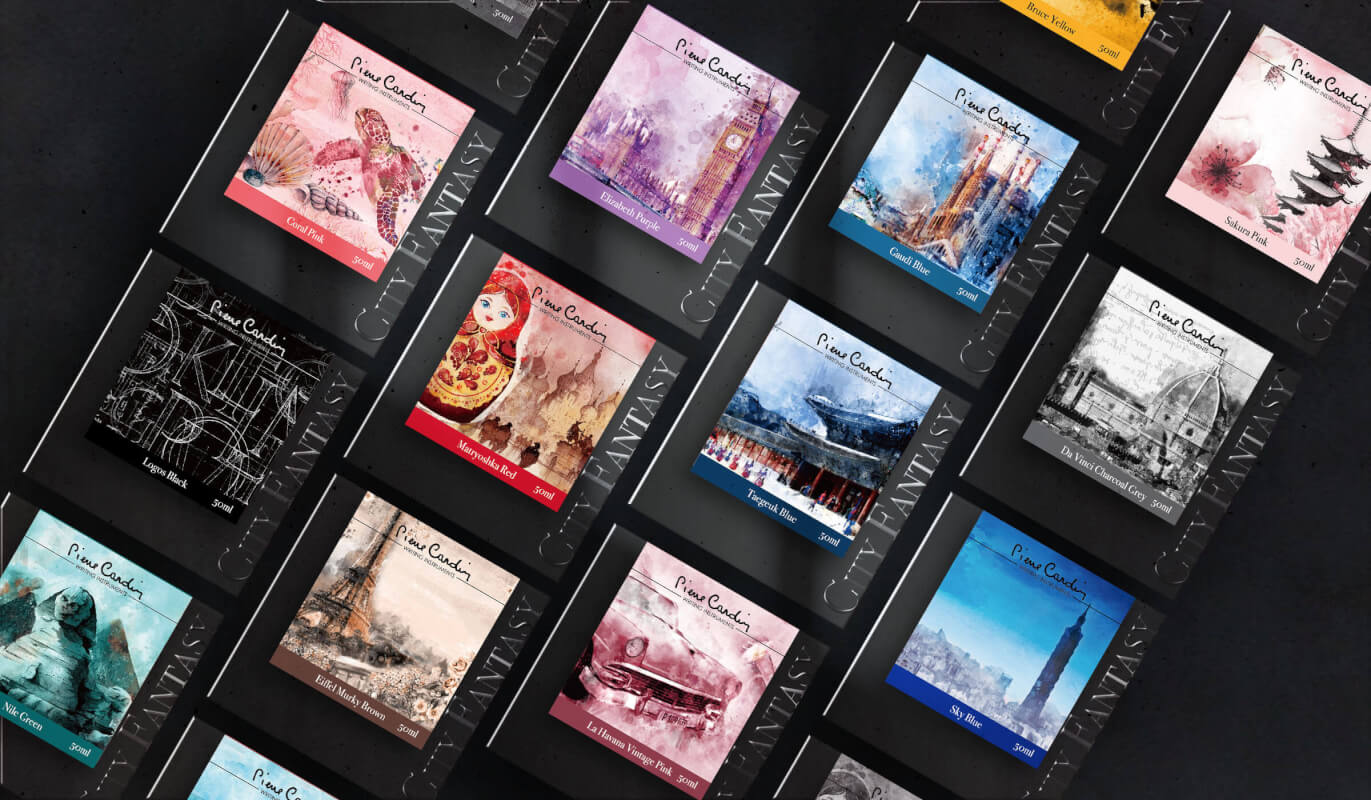
City Fantasy inks
Brush pens commonly use water-based or pigment formulations, depending on the model:
視型號而定,毛刷筆常用水性或顏料配方:
Water-based / dye tips 水性/染料筆尖
- Bright, vibrant colour
- Smooth flow and easy blending with water or a water brush
- May not be fully water-resistant once dry
- Suitable for practice lettering, journals, and indoor sketching where permanence is less critical
- 顏色明亮鮮豔
- 流暢易用水或貯水毛筆混色
- 乾透後未必完全防水
- 適合練習美術字、手帳與對耐久性要求較低的室內速寫
Pigment tips 顏料筆尖
- Better lightfastness and water resistance once dry
- Often preferred for finished artwork, outdoor sketching, and work that may meet moisture
- Can feel slightly denser on the page; some tips need a little more care to avoid drying if left uncapped
- 乾透後耐光與防水較佳
- 常選用於完成作品、戶外速寫及可能接觸濕氣的作品
- 紙上感覺略為濃稠;部分筆尖若不蓋蓋較易乾涸,需多加留意
Always check the maker’s guidance for your specific pen. Some brush pens are refillable with bottled ink or cartridges; others are disposable. If you refill, use inks compatible with the tip and feed — aggressive solvents or heavy pigments can clog or damage some tips.
請務必查閱您那支筆的原廠指引。有些毛刷筆可用瓶裝墨水或筆芯補充;有些則是用完即棄。若您自行補充,請使用與筆尖及供墨系統相容的墨水——過強溶劑或過重顏料可能堵塞或損壞部分筆尖。
Advantages 優點
- Expressive line variation: One tool covers thin detail and bold strokes.
- Convenience: No separate brush washing between short sessions (though capping and occasional cleaning still matter).
- Beginner-friendly entry to calligraphy: Modern brush lettering is approachable with guided practice.
- Sketching versatility: Great for loose outlines, foliage, shadows, and quick urban scenes.
- Colour range: Many brush-pen families offer rich palettes for illustration and note colour-coding.
- 富表現力的線條變化:一支筆兼顧幼線細節與粗筆。
- 方便:短時間練習不必另外洗筆(但仍要蓋蓋與偶爾清潔)。
- 書法入門友善:現代毛刷字配合引導練習容易上手。
- 速寫多用途:適合鬆散輪廓、樹葉、陰影與快捷城市場景。
- 色彩選擇:許多毛刷筆系列提供豐富色盤,方便插畫與筆記標記。
Disadvantages 缺點
- Learning curve for pressure control: Pressing too hard flattens tips and muddies strokes.
- Paper sensitivity: Thin or very absorbent paper can feather or bleed.
- Tip wear: Soft tips wear faster than metal nibs if used roughly or on rough surfaces.
- Drying risk: Water-based tips dry out if left uncapped.
- Less ideal for tiny, rigid technical lines: Fineliners or fine fountain nibs are better for precise technical detail.
- 力度控制有學習曲線:按得太重會壓扁筆尖、令筆劃渾濁。
- 對紙張敏感:過薄或吸水性強的紙容易滲墨或透底。
- 筆尖損耗:軟尖在粗暴使用或粗糙紙面上,損耗比金屬筆尖快。
- 乾涸風險:水性筆尖若不蓋蓋會乾。
- 不太適合極幼、剛性的技術線:精密技術細節宜用針筆或幼鋼筆尖。
Care and Maintenance 保養與護理
Everyday habits 日常習慣
- Cap promptly: Always replace the cap firmly after use so the tip does not dry or harden.
- Store tip-down or horizontal as recommended: Follow the product guidance; some fibre tips prefer horizontal storage to keep ink evenly distributed.
- Avoid crushing the tip: Do not press vertically with full force or jab the tip into hard surfaces.
- Clean the tip gently: Wipe dried ink with a soft damp cloth or rinse water-brush tips with clean water. Do not soak glued felt tips unless the maker says it is safe.
- 即用即蓋:用後務必蓋緊,以免筆尖乾硬。
- 按建議筆尖向下或水平存放:依產品指引;部分纖維尖宜水平存放,讓墨水分佈均勻。
- 避免壓毀筆尖:不要垂直全力下壓或戳硬物。
- 輕柔清潔筆尖:用軟濕布抹乾墨,或用水清洗貯水毛筆尖。除非原廠說明安全,否則不要浸泡有膠水的毛氈尖。
Longer-term care 長期護理
- If a tip feels dry, try priming on scrap paper with light strokes before forcing more pressure.
- Keep brush pens away from extreme heat, which can expand ink and damage tips.
- For refillable models, flush or wipe the tip when changing colours to avoid muddy mixes.
- 若筆尖感覺乾燥,先在廢紙上輕劃引導出墨,不要立刻加重。
- 避免高溫,以免墨水膨脹並損壞筆尖。
- 可補充型號換色時請沖洗或抹淨筆尖,以免混成濁色。
Common Mistakes 常見錯誤
- Pressing too hard: Creates splayed tips, uneven ink dumps, and early tip wear. Use the pen’s own springiness.
- Wrong paper: Very thin notebook paper often bleeds with brush-pen ink. Prefer smoother sketch or calligraphy paper with decent weight for practice.
- Leaving the pen uncapped: Even a few minutes can start drying some tips.
- Expecting fountain-pen behaviour: Brush pens need different hand angle and rhythm; treat them as brushes that happen to be portable.
- Skipping warm-up strokes: A few curves and pressure drills on scrap paper improve control before a finished piece.
- 按得太重:會令筆尖散開、墨水不均、筆尖提早損耗。請善用筆尖本身的彈性。
- 紙張不對:過薄的筆記簿紙常會被毛刷筆墨水透底。練習宜選較滑、克重足夠的速寫或書法紙。
- 不蓋蓋:即使幾分鐘也可能開始乾筆尖。
- 期待鋼筆手感:毛刷筆需要不同的手部角度與節奏;請把它當成可隨身攜帶的毛筆。
- 跳過熱身筆劃:在廢紙上先畫幾條曲線與力度練習,完成作品前控制會更好。
Practical Uses at I-WAY Academy I-WAY 學院實用場景
- Modern calligraphy and lettering: Thick downstrokes, thin upstrokes, bounce lettering.
- Urban sketching: Quick trees, people silhouettes, shadow blocks, and expressive outlines.
- Chinese and English calligraphy practice: Complementary to brush and nib work you will meet later in the course.
- Layout and titles: Bold headings in journals, sketchbooks, and study notes.
- 現代書法與美術字:粗下行筆、幼上行筆、彈跳字體。
- 城市速寫:快捷樹木、人物剪影、陰影色塊與富表現力的輪廓。
- 中英文書法練習:與課程稍後的毛筆、筆尖練習相輔相成。
- 排版與標題:手帳、速寫本與筆記中的醒目標題。
Pierre Cardin Writing Instruments and the I-WAY Academy encourage you to try brush pens alongside fountain pens and fineliners so you can feel how each tool “thinks” on the page.
Pierre Cardin Writing Instruments 與 I-WAY 學院鼓勵您同時嘗試毛刷筆、鋼筆與針筆,親身感受每種工具在紙上如何「思考」。
Conclusion 結語
The brush pen sits between traditional brush painting and everyday pens: flexible tip, portable ink, and expressive thick–thin lines. Master pressure, choose suitable paper, cap and care for the tip, and you will unlock calligraphy and sketching effects that rigid tips cannot match.
毛刷筆介乎傳統毛筆繪畫與日常用筆之間:柔韌筆尖、便攜墨水,以及富表現力的粗細線條。掌握力度、選擇合適紙張、蓋好並護理筆尖,您就能寫出硬筆難以達到的書法與速寫效果。
In our next lesson, we will explore Glass Pen & Fineliner — two very different precision tools for decorative dipping work and fine detailed drawing.
下一課我們將探討玻璃筆與針筆——兩種截然不同的精密工具,分別適合裝飾性沾墨書寫與細緻描繪。


