


I-WAY ACADEMY
Types of inks I 墨水種類(一)
In this lesson, we build the foundations of ink knowledge. You will learn how dye differs from pigment, how water-based inks compare with oil-based inks, and how those choices affect flow, dry time, and colour vibrancy. This introductory level prepares you for permanence, specialty inks, and pen-safety topics in Types of Inks II — and helps you read labels with more confidence when you choose inks for Pierre Cardin Writing Instruments and everyday practice at I-WAY Academy.
本課我們將建立墨水知識的基礎。您將了解染料與顏料的分別、水性墨與油性墨的對比,以及這些選擇如何影響出水量、乾透時間與色彩鮮豔度。這個入門層次會為您稍後學習耐用性、特效墨與筆具安全作好準備。
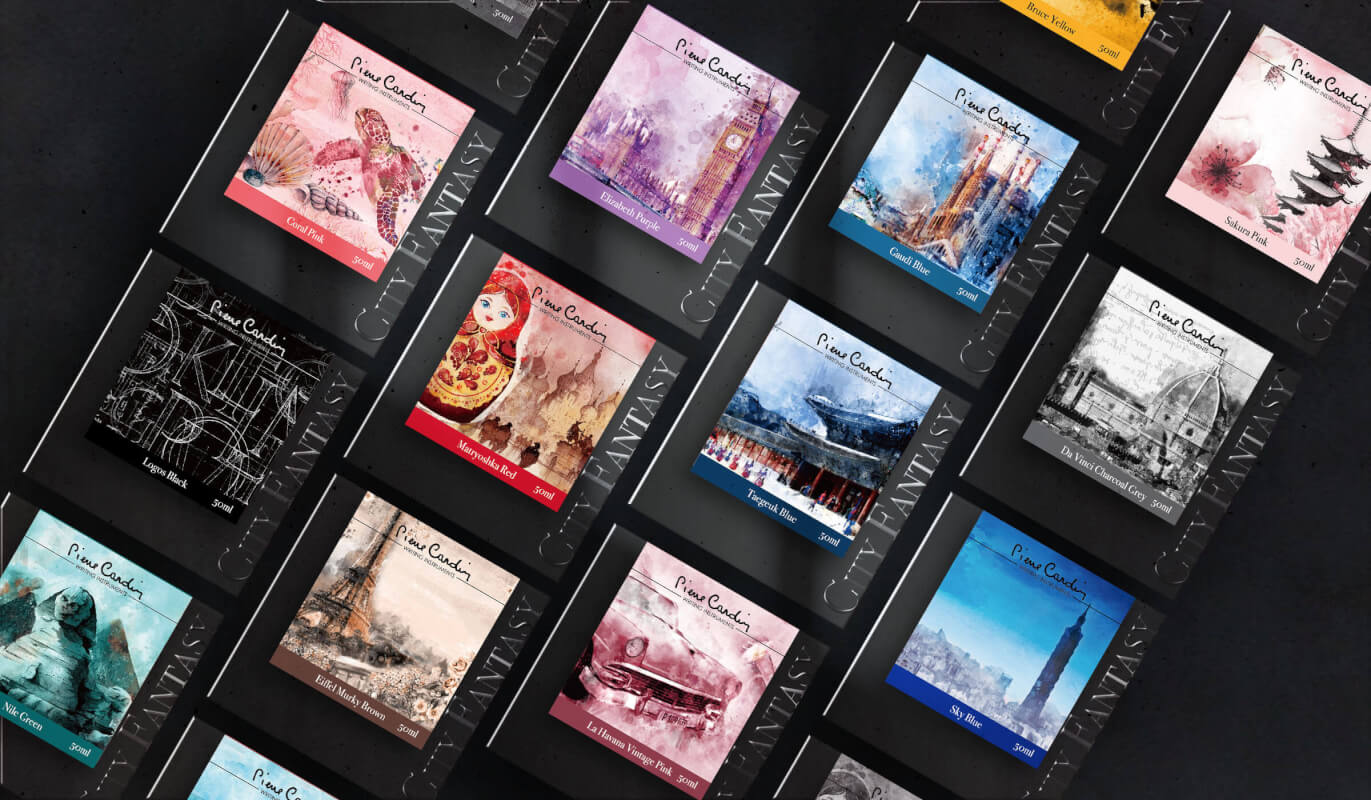
City Fantasy ink range

Bottled ink example
Why Ink Type Matters 為何墨水種類重要
Ink is not just “coloured liquid.” Its chemistry decides:
墨水不只是「有色液體」。它的化學性質決定:
- How smoothly it leaves the tip
- How quickly it dries on paper
- How bright or muted the colour appears
- Whether it smears, feathers, or settles in the pen
- 離開筆尖時有多順滑
- 在紙上乾透有多快
- 顏色顯得明亮還是沉穩
- 會否弄污、滲開,或在筆內沉澱
Matching ink type to pen and paper is as important as choosing the pen itself. The Overview lesson introduced the idea that inks affect vibrancy and flow; here we go one layer deeper.
為筆與紙選對墨水種類,與選筆本身同樣重要。概覽課已提出墨水影響鮮豔度與流動;這裡我們再深入一層。
Dye vs Pigment 染料與顏料
Dye-based inks 染料墨
Dye inks dissolve colourant in a liquid base (often water for fountain, roller, and many brush/fineliner inks). Particles are molecular-scale, so the ink tends to:
染料墨將著色劑溶解於液體基底(鋼筆、走珠筆與許多毛刷/針筆墨常以水為主)。粒子屬分子級,因此墨水往往:
- Flow smoothly through fine feeds and tips
- Show vibrant, luminous colour
- Be relatively easy to clean from pens
- Offer less inherent water and light resistance unless specially treated
- 能順暢通過細進墨系統與筆尖
- 呈現鮮艷、通透的色彩
- 相對容易從筆中清洗
- 除非特別處理,否則本質上較不防水、不耐光
Many classic fountain-pen inks and bright journaling colours are dye-based. They are excellent for daily writing, practice calligraphy, and colourful notes when archival permanence is not the top priority.
許多經典鋼筆墨與鮮艷手帳色都是染料墨。它們極適合日常書寫、練習書法與多彩筆記——當檔案級耐用性並非首要考慮時。
Pigment-based inks 顏料墨
Pigment inks suspend fine solid particles in a liquid. Once dry, those particles sit on or in the paper surface. They often:
顏料墨將細小固體粒子懸浮於液體中。乾透後,這些粒子停留在紙面或紙纖維上。它們往往:
- Provide better water resistance and permanence
- Can appear slightly more opaque or “solid”
- Need more care in fountain pens because particles may settle or contribute to clogging if the ink is not formulated for that pen
- Appear frequently in fineliners, drawing inks, and some specialty bottled inks
- 提供較佳防水性與耐用性
- 可顯得稍不透明或較「實色」
- 用於鋼筆時需更多護理,因粒子可能沉澱;若配方不適合該筆,較易助長堵塞
- 常見於針筆、繪畫墨與部分特效瓶裝墨
Beginner takeaway: Dye ≈ vivid and easy-flowing; pigment ≈ tougher on the page, potentially fussier in sensitive pens. Always check whether a pigment ink is marked safe for your pen type.
初學者重點:染料 ≈ 鮮艷、易流動;顏料 ≈ 在紙上更堅韌,對敏感筆具可能較挑剔。請務必確認顏料墨是否標明適合您的筆種。
Water-Based vs Oil-Based 水性與油性
Water-based inks 水性墨
Used widely in:
廣泛用於:
- Fountain pens
- Roller pens
- Many brush pens and fineliners
- Most bottled calligraphy and drawing inks meant for dipping or fountain use (when labelled as such)
- 鋼筆
- 走珠筆
- 許多毛刷筆與針筆
- 多數標明可沾寫或鋼筆用的瓶裝書法/繪畫墨
Traits:
特點:
- Smooth, wet line
- Often richer-looking colour on the page
- Longer dry time than oil ballpoint ink — smudge risk on glossy or slow paper
- Caps matter: tips and nibs dry if left open
- 線條順滑濕潤
- 在紙上顏色往往更豐富
- 乾透時間長於油性原子筆墨——光滑或慢乾紙較易弄污
- 筆蓋重要:筆尖與筆嘴敞開會乾
Oil-based inks 油性墨
Most familiar from ball pens:
最常見於原子筆:
- Thicker viscosity
- Fast drying and lower smudge risk
- Reliable on many everyday papers, including some carbonless forms
- Generally less “juicy” colour than water-based roller or fountain inks
- Tips can often retract without a traditional cap
- 黏度較高
- 速乾、較不易弄污
- 在許多日常用紙上可靠,包括部分無碳複寫表格
- 顏色一般不如水性走珠或鋼筆墨「飽滿」
- 筆尖常可內縮,無須傳統筆蓋
Beginner takeaway: Water-based ≈ smoother and more vivid, slower to dry; oil-based ≈ controlled, quick-dry everyday writing.
初學者重點:水性 ≈ 更順滑鮮艷、乾得較慢;油性 ≈ 可控、速乾的日常書寫。
Flow 出水量/流動性

Ink cartridges
Flow describes how readily ink moves from reservoir to paper.
「出水量/流動性」描述墨水從墨囊到紙面的順暢程度。
Factors that influence flow:
影響流動的因素:
- Ink viscosity (thickness)
- Surface tension and additives
- Pen design (nib slit, feed, rollerball, brush tip)
- Paper sizing (how absorbent or resistant the sheet is)
- Temperature and how long the pen has rested
- 墨水黏度(稠度)
- 表面張力與添加劑
- 筆具設計(筆尖縫、進墨芯、走珠、毛刷尖)
- 紙張施膠(吸水或抗水程度)
- 溫度,以及筆擱置了多久
Wet inks feel luxurious and darken colour, but may feather on poor paper or dry slowly. Dry inks feel more controlled and dry faster, but can skip on very absorbent or toothy sheets if the pen is already a dry writer.
濕潤的墨手感華麗、顏色更深,但在劣質紙上可能滲開或乾得慢。偏乾的墨手感更可控、乾得較快,但若筆本身偏乾,在極吸水或粗糙紙上可能斷墨。
When practising, test a new ink on your usual paper before an important piece. A beautiful bottle colour that floods cheap notebook paper may perform beautifully on quality fountain-pen or sketch paper.
練習時,請先在您常用的紙上試新墨,再用於重要作品。在廉價筆記簿上會滲開的漂亮瓶裝色,在優質鋼筆紙或速寫紙上可能表現極佳。
Dry Time 乾透時間
Dry time is how long ink stays smearable after writing.
乾透時間是指書寫後墨跡仍可被抹花的時長。
- Oil-based ball ink: usually fastest among common writing inks
- Water-based dye fountain/roller ink: moderate; depends on paper
- Very wet or heavily saturated inks: slower
- Coated or glossy papers: often slower than absorbent uncoated papers
- 油性原子筆墨:常見書寫墨中通常最快乾
- 水性染料鋼筆/走珠墨:中等;視紙張而定
- 極濕或高飽和墨:較慢
- 塗層或光面紙:往往比吸水的未塗層紙更慢乾
Practical tips:
實用提示:
- Blot or pause before closing a notebook if you use wet ink
- Left-handed writers may prefer quicker-drying inks or papers with good absorbency balance
- For sketching layers, confirm the base ink is dry before washes or pencil shading on top
- 若用濕墨,合上筆記簿前先吸乾或稍等
- 左利手書寫者可選較快乾的墨,或吸水平衡良好的紙
- 分層速寫時,確認底墨乾透再加水渲染或鉛筆陰影
Colour Vibrancy 色彩鮮豔度
Vibrancy depends on:
鮮豔度取決於:
- Dye vs pigment chemistry
- Concentration of colourant
- Paper whiteness and sizing
- Line width (broader wet lines look deeper)
- 染料與顏料化學
- 著色劑濃度
- 紙張白度與施膠
- 線寬(較闊的濕線看起來更深)
Dye inks often look especially bright and transparent; pigments can look strong and steady. Shimmer and specialty effects (covered more in Types of Inks II) add sparkle but do not replace good fundamentals — a well-chosen simple dye or pigment ink already transforms handwriting and sketches.
染料墨往往特別明亮通透;顏料墨則可顯得結實穩定。閃粉與特效(墨水種類 II 會再談)能增添光彩,但不能取代良好基礎——一支選得妥當的簡單染料或顏料墨,已能改變字跡與速寫的質感。
Quick Comparison Chart 速查對照表
| Aspect 項目 | Dye (typical) | Pigment (typical) | Water-based 水性 | Oil-based 油性 |
|---|---|---|---|---|
| Colour | Very vibrant | Solid / durable look | Often vivid | More muted |
| Flow in fine pens | Usually excellent | Varies; check safety | Smooth / wet | Controlled |
| Water resistance | Often lower | Often higher | Varies by formula | Generally smudge-resistant when dry |
| Common tools | Fountain, roller, many brush tips | Drawing pens, some FP-safe lines | FP, roller, brush, fineliner | Ball pens |
Conclusion 結語
Ink foundations start with two big pairs: dye vs pigment and water-based vs oil-based. Together they explain much of what you see in flow, dry time, and colour vibrancy. Master these ideas and labels on bottles and packaging become far easier to interpret.
墨水基礎始於兩大對照:染料與顏料、水性與油性。它們合起來解釋了您在出水量、乾透時間與色彩鮮豔度上所見的大部分現象。掌握這些觀念後,瓶身與包裝上的標示就容易理解得多。
In our next lesson, Types of inks II, we go further into permanence and water resistance, fountain-pen-safe choices versus iron-gall and pigment caveats, specialty shimmer inks at a high level, clogging risk, and when to choose each category.
下一課《墨水種類 II》我們將進一步談耐用性與防水性、適合鋼筆的選擇對比鐵膽與顏料的注意事項、特效閃粉墨的概要、堵塞風險,以及何時選用各類墨水。


